Hiragana
The soft phonetic script used for native Japanese words, grammar endings, and beginner reading.

Explore cards, play recall rounds, and build Japanese memory one tiny win at a time.
Learning Japanese is not just memorizing an alphabet. You meet two phonetic scripts plus kanji, a system of meaning-bearing characters. The app exists because that mix is easier to learn when each symbol becomes an action, not a static table.
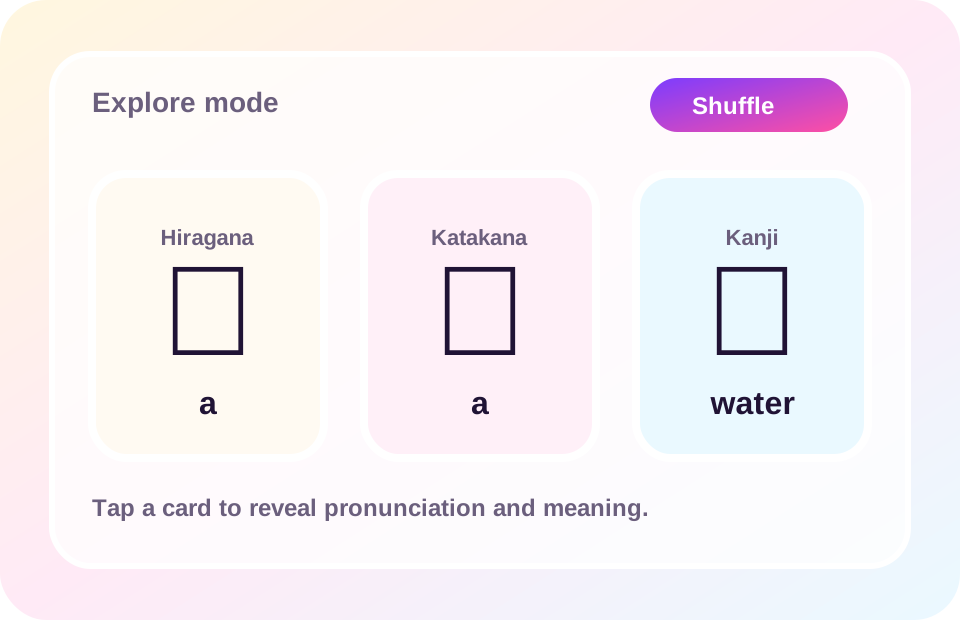
The soft phonetic script used for native Japanese words, grammar endings, and beginner reading.
The angular phonetic script used for loanwords, names, emphasis, and many modern terms.
Meaning-rich characters used for words and concepts. One symbol can carry sound, meaning, and context.
Most beginners see giant kana charts and kanji lists, understand them for a moment, then lose them later. Japanese Memory Game is built around retrieval practice: short rounds, immediate feedback, and repeated recall. The goal is to help learners cross the first wall without ads, dark patterns, or noisy lessons.
Start by browsing, then ask your memory to work. The interface stays deliberately simple so the card, answer, and next tiny win stay in focus.
The app is intentionally small. Less setup means fewer exits before the first useful memory rep.
Flip cards without pressure. See the character, pronunciation, and meaning until the deck starts to feel familiar.
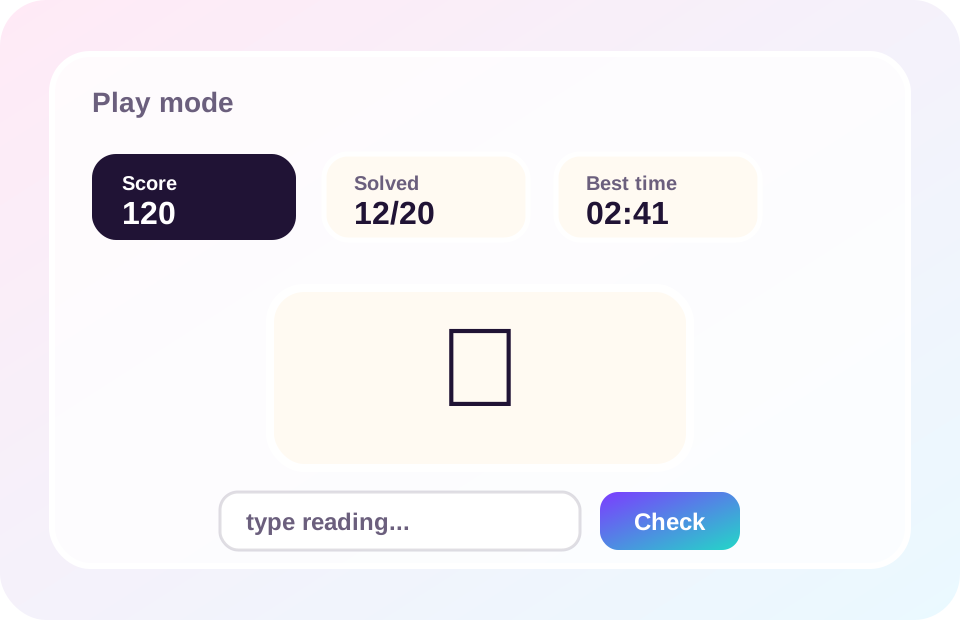
Recall from memory instead of just recognizing. Type the answer, check it, and build a real retrieval habit.
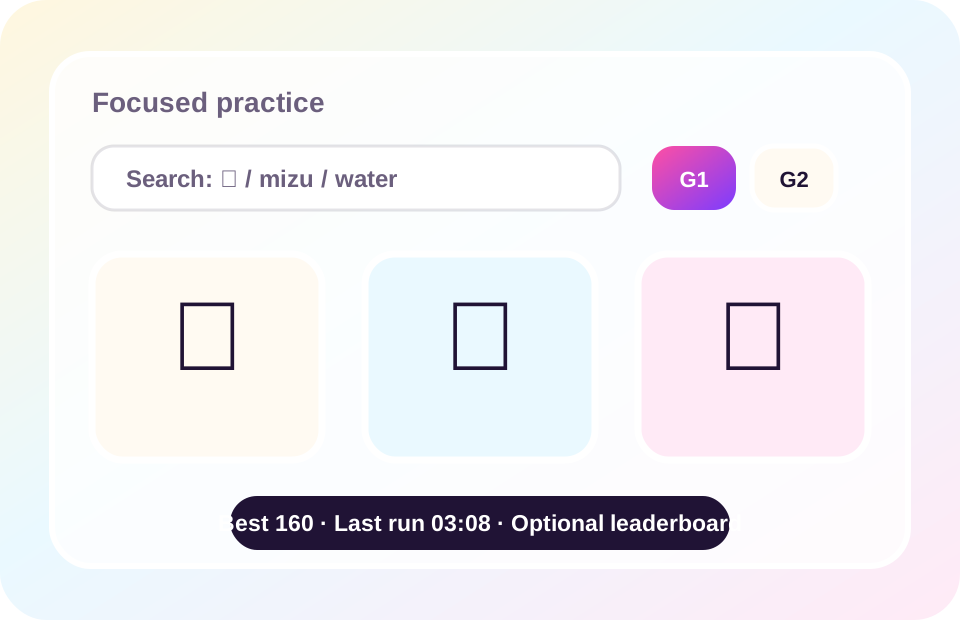
Start with Hiragana, continue with Katakana, then move into Kanji Grade 1 and Grade 2 when kana feels comfortable.
Use best score, solved cards, and best time as tiny signals. One clean round beats a long unfocused session.
Most people bounce because the next action is unclear. This is the shortest useful path: get one small win, then decide whether to go deeper.
If the first three minutes feel useful, save your access with a free account. If you are already serious about kanji, Plus is there when you need the advanced grades.
We use essential cookies for sign-in, anonymous play limits, and security. We also use local storage for your game score and Umami for privacy-friendly aggregate analytics. No ads or tracking pixels. See our Cookie and Storage Policy.